Westchester Food Pantry – Food Drive

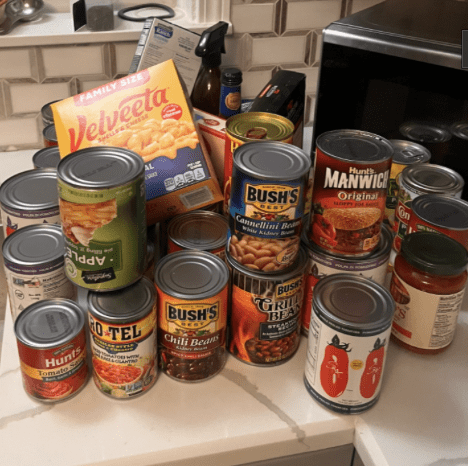
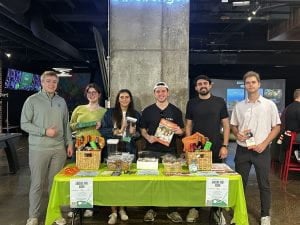
Our team planned a Thanksgiving-themed food drive to support the Westchester Food Pantry. We chose this project because we want to help fight local food insecurity and give it back to the community during the season of gratitude. We planned to collect at most 100 cans of non-perishable food using labeleddonation boxes with flyers and a QR code for people who want to donate money instead. But we surpassed this goal with a total of 222 items of food. After the collection, a team member delivered what was raised to the pantry. This project helped raise awareness and make a positive impact within our community. 

 Westchester Food Pantry’s goal is to provide a reliable source of healthy food assistance for those in need, living in the communities served by the Westchester Food Pantry. They provided us with a list of foods they were looking for and worked with us on when to drop things off, which helped us make sure our project ran smoothly during these busy holiday seasons. Their values include compassion, fostering health, innovation, collaboration, accountability, volunteerism, corporate Citizen, and sustainability. 

 Our objective was to collect a minimum of 100 non-perishable food items in a week. We ended up achieving over double our goal with 222 items and a monetary donation of $10. We were able to achieve this by planning ahead and getting in contact with the right DePaul staff members at an efficient time. We have received donations from the gym, student housing, and other locations on campus. It was also thanks to the donations of individuals in an outside class that we were able to surpass our initial goal. 

The first lesson learned about managing projects would be that as a team it is very important that you communicate consistently. Everyone should be on the same page throughout the entirety of the project in order for everyone to be organized when completing the task objectives or goals. Another lesson learned about managing projects is how to better understand each member’s strengths or restrictions. Being able to be flexible as a team allows the group to divide tasks more efficiently because each member can contribute in their own best way or if uncomfortable, can be assigned to the next person. 

 Our recommendation for future teams doing similar projects is to establish a clear form of communication and deadlines for when things need to be done by. We also recommend allocating some time to allow for any things that were not planned for. Specifically for things such as permits, which may take more time the expected, and to pick up or deliver certain things. It’s also important to market and distribute flyers effectively, as this helps raise awareness, increase participation, and ensure that the event or project reaches the intended audience. We recommend also taking ideas into consideration although they may not be considered the 1st choice. It’s always best to have back-up plans for when things do not go well.  


Beats N’ Bingo- A Game with a Cause

 Brief Description of the Project

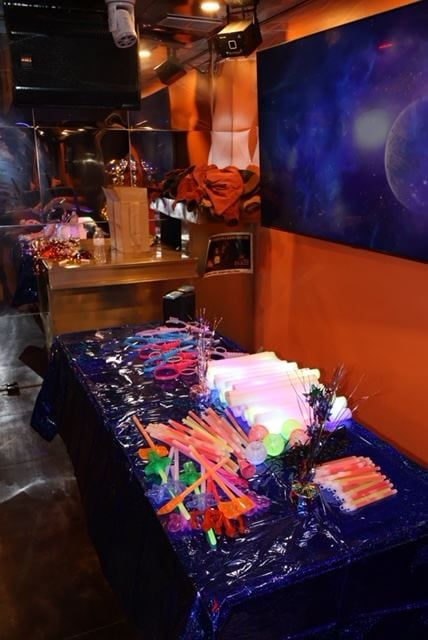
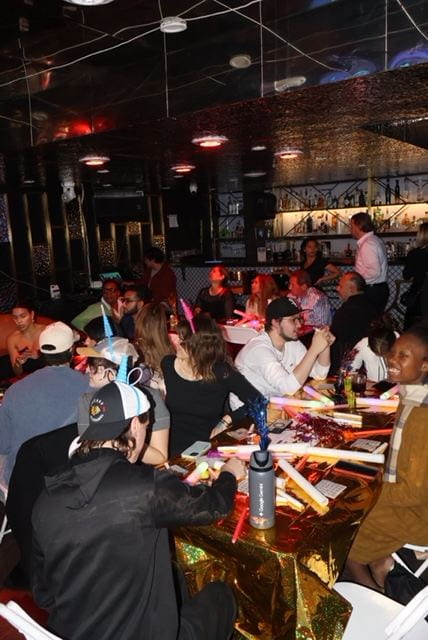
Our project, Beats N’ Bingo, was a one-night fundraising event designed to bring together students, young professionals, and community members for a unique evening that combined high-energy house music and the classic game of Bingo. The event was hosted at King KTV in Chicago’s Chinatown and featured live DJs, multiple rounds of bingo with prizes, and a post-bingo dance party. Tickets were sold for $15 for students and $25 for all other participants, and additional revenue came from raffle ticket sales and open donations. The event was designed, planned, and executed entirely by a six-person student team as part of our Managing Projects and Teams course.

Brief Description of the Charity

The fundraiser supported Bear Necessities Pediatric Cancer Foundation, a Chicago-based nonprofit dedicated to eliminating pediatric cancer and providing critical support to families affected by it. Their “Bear Hugs” program helps ease the financial and emotional burden of families by providing customized experiences and essential needs during treatment. Our goal was to not only raise funds but also to bring awareness to this incredible organization and its impact on local families.

Factual Analysis of Success in Terms of Project Objectives

Our main objectives were to raise funds, secure sponsorships, and deliver an engaging event experience. We exceeded our fundraising target and community engagement goals:

  • Total funds raised: Over $1,600, surpassing our initial goal.
  • Sponsorships secured: More than 7 local sponsors contributed raffle prizes and in-kind donations.
  • Attendance: Approximately 30 attendees, generating strong energy and participation throughout the night.
  • Community impact: We successfully increased awareness of Bear Necessities among attendees, with several expressing interest in future involvement.

Overall, the project met and exceeded expectations for both fundraising and execution.

4) Lessons Learned About Managing Projects

Through the Beats N’ Bingo project, our team gained valuable lessons in project management and teamwork:

  • Start Early and Plan Ahead: One of the biggest lessons was the importance of starting marketing and outreach efforts as early as possible. Promotion and sponsorship outreach took longer than expected, and earlier planning would have reduced last-minute stress.
  • Communication and Accountability: Keeping consistent communication and holding each team member accountable was key to staying on track. We learned the value of applying “healthy pressure”—encouraging teammates to meet deadlines without overwhelming them.
  • Adaptability: Despite challenges with venue logistics and timelines, our ability to adapt and redistribute tasks ensured the event stayed on schedule. Flexibility and quick decision-making were vital to our success.

Advice for Future Teams

For future teams planning similar events:

  • Begin marketing as soon as possible. The earlier you start promoting your event and contacting sponsors, the smoother your execution will be.
  • Establish clear accountability. Assign specific roles, set internal deadlines, and check in regularly to maintain progress.
  • Maintain open communication. Weekly updates and honest discussions about challenges keep the entire team aligned.
  • Plan for backup options. Have contingency plans for venue, materials, and funding to minimize last-minute disruptions.

These strategies not only prevent scrambling in the final weeks but also strengthen team cohesion and efficiency.

6) Photos

Summary:
Beats N’ Bingo was a creative, community-centered success. We exceeded our fundraising goals, delivered a vibrant experience that united music and philanthropy, and strengthened our skills in leadership, accountability, and project execution.


Greens for Good – ALS United Chicago

Project Description 

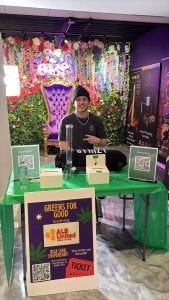
Our team organized a multiple channel fundraising campaign called “Greens for Good” to support ALS United Chicago. The project consisted of two in-person events; a raffle/bake sale at Five Iron Golf in River North on November 15th and another raffle at Bisa Lina dispensary that ran between November 7th to November 14th. We also made an online donation portal that was accessible from a QR code on our fliers as another source if you could not attend any of the events. The bake sale featured homemade cookies that varied in flavors that were given to participants with a raffle entry. We started it at $5 per raffle ticket and then priced it down to $1 to maximize our engagement. We made two gift baskets for two individual winners at Five Iron Golf and a separate raffle for two glass pieces and a travel case at Bisa Lina Dispensary. We also incorporated the donated items from the venues and ALS United Chicago merchandise on top of all the other items that we contributed as a group. 

About ALS United Chicago 

ALS United Chicago is dedicated to supporting families and caregivers that are affected by ALS (Amyotrophic Lateral Sclerosis). The organization takes a collaborative approach to research and provides care to those who are affected by this disease. ALS United Chicago’s goal is not to manage symptoms, but to find a cure. We chose this charity because our group members have family members that are diagnosed with ALS, and we wanted to contribute to raising awareness for a disease that receives limited funding. 

Project Success Analysis  

Overall, we crushed our expectations. We had set three main success metrics. The total funds raised, engagement, and awareness impact. Our best-case scenario was projected to be $1,000 and exceeded it with a total of $1,697 from our fundraiser.  

For engagement, we hoped for our best-case scenario to have 200 participants. We could not track the exact number of participants, but we did estimate around 30 participants came to our in-person event at Five Iron Golf and about 200 participants for the raffle at Bisa Lina Dispensary.  

We were also able to meet our awareness goal. We were able to build a strong relationship with Five Iron Golf and Bisa Lina to secure hosting space, promote the organization we supported, and receive prize donations at their facilities. ALS United Chicago’s marketing director was also super kind and helped us through our journey by providing us with branded merchandise and informational materials for our raffles. 

Lessons Learned About Project Management 

Lesson 1: Detailed Planning Prevents Problems 

When we created our WBS, Gantt chart, and especially our risk management plan, it paid off in many ways. We were able to identify many potential risks before our event and were able to create our contingency plans for each item. We thought of every possible thing that could have gone wrong, like bad weather, allergies, or payment failures and carried extra change if needed at the event. Luckily, our events ran smoothly, and we had very little trouble getting everything sorted. For example, we created allergen labels for our cookies just in case people had nut allergies or could not have any dairy products. Our donation website ran perfectly throughout the duration of our events, and we had to give out very little change to our participants, so we never lost a potential donation. 

Lesson 2: Clear Roles and Communication 

Each member of the group was assigned clear and well-defined responsibilities in our responsibility matrix. This eliminated any confusion about who handled what. We would be actively communicating and holding everyone accountable. We experienced very little conflict and had clear expectations of what had to be done. 

Lesson 3: Multiple Streams Maximize Impact 

We had created three separate revenue streams. Our biggest one was an online portal created through ALS United Chicago’s website, where anyone can donate and participate. While our main events mainly created engagement and raised awareness, almost 90% of our funds came from online donations. This showed us that we should not rely on one type of fundraising method. We were able to create an experience where it can be as simple as clicking on the QR code in the comfort of your home or come and experience the event in person. 

Advice for Future Teams 

Start your risk management planning early. Do not wait until you have finalized every detail. Identify problems as soon as you have your general plan and keep updating your risk assessment as you move forward with the project. Having those contingencies gave us confidence and saved us when things did not go as planned. Do not tunnel vision on one charity or organization. For example, many of them will not get back to you in a timely manner, and deadlines creep up on you when it’s least expected. We did not email only one organization. We emailed around 4 of them and only 2 of them got back to us on time. 10 weeks is a short amount of time, so start creating your plan as soon as possible. 

Price for participation and not maximize profitability. We first started selling our raffles for 5$ and cookies and lowered them to just 1$ to make it easy for everyone to participate. We wanted this low barrier of entry because we wanted to encourage as many people as possible and to engage in our fundraiser. At the end of the day, it’s a fundraiser where we wanted to do good for the community and not worry about maximizing our profits per transaction.  

Lastly, invest time in making your donation pages and fliers. Check to see if the QR code and donation link are working smoothly before your event. Check not only through your phone but also check on other devices like your computer to see if everything looks good. When creating your donation page and fliers, you want them to be eye catching and material that people would want to share on social media. We were able to make promotional material for our Bisa Lina event so the marketing team was able to post it on their social media.  

Photos!


Bernies Book Bank- Bakesale and Bookmark Decorating

Description of the project  

Our team wanted to focus on making a local impact through our fundraising project. We wanted to fundraise for an organization based in Chicago. Because of this, we hosted a fundraising event in Oz Park to get the community involved and collect monetary, and book donations for Bernie’s Book Bank. Our event was a bookmark decorating, pay-what-you-can bake sale at Oz Park during a community bonfire event that the park hosted. Because of our organization’s nature; being centered around books and kids, it made sense for us to do a family, and more importantly, a kid-friendly activity. We wanted to do something that would allow people to spend some time at our table and draw the attention of others, so we chose bookmark decorating and a bake sale. The bookmark decorating was free, and the bake sale was pay what you can. This might seem counterintuitive for a fundraiser, but we didn’t want to limit our potential donations by assigning specific prices to our goods. Instead, we just reminded anyone interested in buying a baked good where the proceeds were going and had a QR code linked to our donation page on Bernie’s website out on the table. 

Brief description of the charity 

Bernie’s is a nonprofit dedicated to making sure that having books in your home is a luxury all children have access to regardless of what their home looks like. The organization originated from the Chicagoland area, and now operates in Milwaukee and around Florida as well. 

Factual analysis of success in terms of project objectives  

Our goal was to raise $250 in donations and 100 book donations, we were able to raise $320 and collect over 250 books. Not only were we able to collect donations for the project, but we were able to raise a lot of awareness about Bernie’s within the community. Having the bookmark decorating aspect at our event meant people spent longer at our table, and were able to listen to us tell them more about Bernies, or read about it on our trifold. 

Three lessons learned about managing projects  

  • One of the biggest lessons that we learned through this project was the importance of having backup plans, and being able to pivot. A lot of our original ideas had to change; our organization, our event location, our number of events. Being flexible and being able to pivot rather than starting over was essential.
  • Good communication is the most important thing for a team. Finding out what kind of communication works best between you and your teammates. Putting in shared effort to respond quickly and thoughtfully to each other. 
  • The project moves faster than you expect it to. You are on a timeline that the world outside of your team, like the business you’re trying to partner with, is not. So doing everything within your team punctually is important. 

Advice for future teams doing similar projects 

Use this project to do something you’re passionate about. There is so much freedom in what your project, event, scale, demographic, organization, etc can be, so I’d suggest using that to your advantage to get experience, and network, in an area that you’re interested in. 

House4Housing – Rave for a Reason

Brief description of the project

We hosted an electric event in downtown Chinatown, keeping it local while bringing to community together for a night of fun and purpose. We raved for a reason-dancing all night with friends and family while supporting Heartland Housing. With over 100 guests, free street parking, security, open cash bar, immersive visuals, smoke machines, and vibrant decorations, we created a safe and enchanting atmosphere for everyone. By the end of the night, we raised enough to cover over venue costs and proudly donated over $1,000 to Heartland Housing.

Brief description of the charity

As Chicago’s immigrant and low-income communities evolve, Heartland Alliance for Human Needs & Human Rights adapts its services to meet their changing realities. As supportive and affordable housing becomes an increasingly urgent need, the organization establishes Heartland Housing, Inc. In 1988, a dedicated development arm was created to provide stable, affordable housing for some of the city’s most vulnerable residents.

Factual analysis of success in terms of project objectives

Objectives:
—At least 35 attendees (breakeven point)
—Reach over 50k+ views on social media
—Donate at least $500

Results:
—100+ attendees
—90,000+ people reached on social media
—$1,000+ to donate

4) Two or three lessons learned about managing projects

Having extra time is one of the most valuable assets in a large-scale project. Unexpected obstacles will always come up, and building in time to respond before deadlines creates a crucial safety net. It’s also essential that everyone on the team is prepared for the workload and committed to holding each other accountable or stepping in to help when someone falls behind. Our event succeeded because we built a strong sense of teamwork from start to finish.

5) Advice for future teams doing similar projects

Choose a venue that’s easily accessible by multiple types of transportation, whether by train, car, or ride share. Market your event as much as possible—social media can help you reach a large audience quickly. Get tasks done ahead of schedule, because things rarely go exactly as planned, and extra time allows you to adjust smoothly. If you have multiple performers, keep backup equipment on hand and test everything for each artist before the show begins to avoid delays in the set list.

*We all had a great time. We all put in effort, we all had a say in decisions, and we all had access to the marketing and financial records throughout the entirety of the project. Building a team that is actually invested in the shared goal and wants to work together goes a long way.*

6) Photos related to the project. Examples could be event photos, website, team members, etc.


Presented by House4Housing

Netflix Post Event Video

Website @ House4Housing.org

Instagram @ House4Housing

Facebook @ House4Housing

Reddit @ House4Housing

Youtube @ House4Housing

TikTok @ House4Housing (which keeps getting banned because it’s not a business account)

Email @ House4Housing@gmail.com

Nourishing Hope Donation Drive

If you’re taking MGT 303 – Managing Projects and Teams, the charity project will be one of the most hands-on experiences of the class. You’ll partner with a nonprofit, design a real project, and apply project management tools to execute it. When my team completed the assignment, we worked with Nourishing Hope, a Chicago nonprofit fighting food insecurity. Our project didn’t go exactly the way we planned, but the challenges we ran into ended up being the best part of the learning experience.

The assignment seems simple at first: pick a charity, plan a project, carry it out, and present your results. But the real goal is to show how well your team can manage a project which was how you plan, communicate, adapt, handle risks, and work under pressure. You’ll create documents like an implementation plan, a risk management plan, and a final presentation. Your grade depends far more on your process than on how much money you raise.

Our project, “Feed Chicago Together,” was originally focused on running two in-person tabling events on the DePaul Lincoln and Loop Campus. We planned to collect canned goods, encourage student donations, and raise between $1,000 and $1,500 using QR-code flyers. Everything was perfect—until DePaul rejected our tabling request :(. In that moment, our entire project shifted from an in-person event to a digital-only fundraising campaign.

From there, we had to rethink everything. We redesigned our flyers for online sharing and promoted them through Instagram, group chats, direct messages, and our own student networks. We coordinated closely with our contact at Nourishing Hope, who helped us track donations and keep the campaign organized this is the website if you want to check it out (https://give.nourishinghopechi.org/fundraiser/6812599). Weekly team meetings kept everyone aligned as we pushed the project forward.

In the end, we raised around $650, less than our original goal, and we were still able to collect some physical food donations like cans. Still, the project had a good impact, and the amount donated supported many families. More importantly, we learned what real project management feels like dealing with uncertainty, reacting quickly, and adapting to changes outside our control.

Our biggest challenge was not securing event approval early. It taught us that one unverified event can change an entire project. We also realized that digital fundraising is much harder without in-person visibility and requires far more time and outreach. But even with these obstacles, our teamwork, communication, and quick adaptation helped us move forward successfully.

For future students, my advice is simple: get all approvals early, always build a backup plan, and start promoting sooner than you think. Don’t stress if things don’t go perfectly; your grade comes from how you manage the project, document your decisions, and reflect on what you learned.

Our team still created real impact and gained skills that translate directly into real project management roles. If you’re starting your MGT 303 project soon, take our experience as a guide on what not to do lol (JKJK). Prepare early, stay flexible, and learn from every challenge you face that’s what the project is truly about!

Fundraising for Lincoln Park Community Services with Maison Parisienne


MGT 303: Managing Projects and Teams – Team 1 Field Project

Lincoln Park Community Services x Maison Parisienne

           .            

Natalia, Mandy, Kara, Alaina, and Kira

Brief description of the project  

Our team partnered with Maison Parisienne, a French café in Lincoln Park, to host a fundraising event supporting Lincoln Park Community Services (LPCS). Leveraging a team member’s connection to the café, we organized a two-day in-person fundraiser offering tiered donation incentive. Between May 6th and June 1st, Maison also conducted a passive fundraiser through their “round-up” option at checkout. All donations went directly to LPCS, with Maison generously covering the cost of our items handed out during in-person tabling: coffee, cookies, and the raffle prize. Through tabling efforts, online giving, and passive fundraising, we raised a total of $1,331. The campaign was promoted through social media, campus outreach, and LPCS’s own channels, successfully raising both funds and awareness for LPCS’s mission. 


Brief description of the charity  

Lincoln Park Community Services is a year-round, multi-site organization that has supported adults experiencing homelessness since 1985. With two main locations at 600 W. Fullerton and 1521 N. Sedgwick, LPCS provides shelter for over 120 individuals each night. Their comprehensive services include three daily meals, educational programming focused on literacy, and permanent supportive housing throughout Chicago—from Austin to Rogers Park to South Shore. One of the reasons we chose LPCS is because they are dedicated to empowering individuals and helping individuals achieve long-term stability. 

Factual analysis of success in terms of project objectives  

Our project set out to raise funds and increase awareness for Lincoln Park Community Services (LPCS) and their impact on the local community. By hosting the event in the heart of Lincoln Park, we were able to reach new audiences, many of whom were unfamiliar with LPCS and became interested upon learning that it directly benefits their neighborhood. This local connection sparked meaningful conversations and increased engagement, even among those who did not donate. We distributed flyers, shared LPCS’s mission, and promoted the event through multiple channels to ensure visibility.   

In terms of measurable outcomes, we successfully exceeded our goals. Our fundraising target was $1,200, with a best-case projection of $1,500. We raised a total of $1,331, surpassing our original goal. Beyond the financial success, we achieved significant outreach, raising awareness about LPCS through direct interactions, tabling, and social media. Overall, the event effectively fulfilled both our fundraising and awareness objectives, creating a meaningful impact for LPCS. 

Lessons learned about managing projects  

  1. Clear communication is key, having regular updates between the team members, but also between the organization and any other outside contacts. Our first order of business when starting this project was establishing solid modes of communication. Between our team members, texting in a group chat was the most convenient, whereas with Maison Parisienne, our team member Alaina was able to communicate directly with her manager or talk with the team in person on shift. As for LPCS, we reached out to one of the directors from their website and we were then able to get in contact with someone via email whose focus was on helping fundraise and spread awareness of our event. 
  1. Double-check logistics and make sure everything is set and ready. Our banner was too big to place in front of the table, which could have been problematic. Yet, it worked out better for us because we were able to gain more visibility with it on the window behind us. This ties in to being flexible and adaptable, even if something doesn’t go as planned. 


Advice for future teams doing similar projects  

  • If your project goal is to get the most amount of donations possible, consider multiple days of tabling or conducting the event vastly helped improve our turnout. We found more people approaching the table during slower hours when there were fewer crowds. Having both Friday and Saturday greatly benefited our monetary outcome as well as implementing the Toast round-up system for 4 weeks, so we started generating passive income from the get-go. 
  • If you are fundraising, try to see if the non-profit can help create a donation site. We noticed that GoFundMe profits from various fees, so it is way more effective to have a private link where the funds go directly to the non-profit. We were lucky because the LPCS already had one, but it may also be possible to create one. Since we had no expenses, we were also able to say “all proceeds go directly to LPCS” which appealed to everyone. 

Photos of Project

Flyer for Event

Team on days of event

Table set up during event

Raffle Prize and Winner


Huge thank you to Maison Parisienne, LPCS, and Prof. Cook for making this project such a success!

-Team 1

Learn more about Lincoln Park Community Services and how you can get involved here: https://www.lpcschicago.org/


Greater Chicago Food Depository

Description of the project:

Our project focused on raising awareness and donations for the Greater Chicago Food Depository. We held a table at DePaul Loop Campus outside the dining hall to do so. We posted on social media and put up fliers around campus as well to promote our event. We hoped to gather donations, food and general awareness about food insecurity in Chicago and the surrounding areas.

https://myfooddrives.org/greaterchicagofooddepositorydepaul

Description of the charity:

The Greater Chicago Food Depository is a non-profit organization that acts as a food bank for Cook County. Their mission is to end hunger and address the root causes of food insecurity. Based in Chicago, they operate and work with a network of food pantries, soup kitchens, shelters, and community programs to provide those in need with food. Besides helping with food insecurity, the organization also offers job training and nutrition education to help the long-term fight. Additional details about the Greater Chicago Food Depositary can be found at its site: www.chicagosfoodbank.org.

Success Chart:

Below is a chart of targets we had for our event and what we accomplished.

  Target  Actual  Accomplished? 
$ Raised  $750​  $663​  88% of target​ 
Meal Equivalents (lbs food)  2,000 meals​  1,989 meals  99% of target​ 
Social Reach  1,000 views​  1,400 views​  Achieved​ 


Overall, the event was a success, with us pretty much reaching our target for the meals provided.

Lessons learned about managing projects:

Working on this event, we learned a lot of valuable lessons about working as a team. It is extremely important to have everyone on the same page as well as pacing towards the common goal together. This includes having constant check-ins to ensure that everyone is in the same mind space as well and if someone has a concern to address it. It is also important to have a strong project manager, as this job does not come easy. Organization is one of the best ways to stay on top of tasks. Some of the challenges we faces were involving contacting people and or organizations to ask for insight or permissions. It is important to remember that outside groups operate on their own schedule, so it is important to find a point of contact as well as make this contact as early as possible.

Advice for future teams:

Our advice for future groups would be to work as a team, and if possible, have a team with similar schedules so it is possible to meet in-person rather than do everything online. Being face-to-face for a group project such as this would have helped our group stay more organized and on the same page. It is also crucial to delegate tasks early on rather than last minute to not catch someone off guard. And with any other tasks do not procrastinate, this class flies and is over before you even know it.

Elizabeth Ann Seton Food Pantry and Soup Kitchen Fundraiser

Description of the project

Our team worked with the Elizabeth Ann Seton Food Pantry and Soup Kitchen to raise money and collect nonperishable and monetary donations through a tabling event on the first floor of DePaul’s Lincoln Park Student Center! Leading up to the tabling event, which was held on June 3rd, 2025, we created flyers, posted them around campus, created social media posts, shared them with the DePaul community, and gave short-and-sweet speeches during our other classes. Beyond collecting donations, we also prioritized community engagement during our tabling event to encourage the DePaul community to provide future investment, interest, and service to the Seton Pantry, as well as spread awareness about food insecurity in Lincoln Park and the greater Chicagoland area. After our tabling event, we inspected donated nonperishables for their quality, presentability, and if they met the requirements for donations provided to us by the Seton Pantry. After sorting through the goods, we measured the amount of nonperishables and money donated through cash and online via the QR code that the Pantry provided. Finally, our team members delivered all proceeds and donations to the Seton pantry.

Description of the charity

The Seton Food Pantry has been in continuous operation since 1980. The Pantry is an independently run and financed, non-sectarian, and inter-faith program affiliated with St. Vincent de Paul Roman Catholic Parish in Chicago. The Seton Food Pantry proudly serves the general public and provides social services on a non-discriminatory basis. These services include regular social worker drop-in services, serving over 250 meals every week throughout the year, and offering hygiene kits & food for families needing supplemental assistance.

Factual analysis of success

Our team projected three possibilities for our project objectives and outcomes. Throughout the project, we used several KPIs, including collection amounts for the donation and individual community engagements. In advance of our tabling event, we predicted three general outcomes for our fundraiser: best-case, likely case, and lower yield scenarios. Our best-case would have been 500+ individual items collected, our likely case was 250 individual items collected, and our lower yield scenario was 100 individual items collected. Our team ended up collecting 41 packages, many of which contained smaller individual items, amounting to an estimated 90 individual items collected. We also collected around $150+ during our collection period, which started before our tabling event. Although we collected the low-yield scenario, we had over 50 community interactions at our event, and we are still very pleased with the amazing support and donations we received from the DePaul community!

Lessons learned about managing projects

Our team went through a major pivot in our project and its objectives two weeks into the quarter, evolving from our original plan of a bowling project to our amazing fundraiser for the Seton Pantry. This left us with less valuable time to develop our project and created several roadblocks we had to navigate. We learned that team success won’t work without having a structured plan; that having contingency plans and determining our critical path is necessary for the timely completion of projects, and that work breakdown structures should strike a balance between well-structured and flexible for when unexpected obstacles pop up along the way!

Advice for future teams doing similar projects

As a team that went through changes and many unexpected situations, we advise any future teams to follow their project responsibility matrices closely, create a Gantt chart early on, make regular in-person communication and meetings if possible, and start their project the very first day it is assigned.

Bingo Night For Catholic Charities USA

  1. Project Description: Bingo Night With a Purpose

We organized a Bingo Night event on June 3rd, 2025 from 6pm to 7:30om, at DePaul University’s Schmitt Academic Center. The event served a twofold purpose: generating funds for Catholic Charities USA and generating awareness of career opportunities in skilled trades among the underrepresented and lower-income population. The activity was kept simple, interactive, and mission-focused. We charged $5 per ticket, provided unlimited rounds of bingo, and provided prizes ranging from pasta and cooking baskets to gift cards, beauty kits, and more. The idea was to have a social, low-key environment where students could raise money for a good cause and have fun. We had plenty of feedback from attendees which was overwhelmingly positive with many expressing appreciation for the charity we decided on. The proceeds from the event were donated in full to Catholic Charities USA in order to help further their mission to serve vulnerable populations across the country. 


  1. Information about the Charity: Catholic Charities USA

Our beneficiary, Catholic Charities USA (CCUSA), is a 501(c)(3) charity that has been a pillar of American social support since its establishment in 1910. CCUSA offers food aid, housing, and disaster assistance nationwide. More significantly for our project’s topic, the organization also addresses vocational readiness, collaborating with local agencies to enable people to gain access to trade schools, apprenticeships, and career progression opportunities. In so many ways, the poverty-stricken neighborhoods where college just isn’t in the cards financially, the opportunities provided by programs such as these give a life-changing opportunity at stability and success. Much of CCUSA’s success comes from its thousands of dedicated volunteers who assist with distribution, resume building workshops and more which makes it a true community-powered organization.


Website: catholiccharitiesusa.org

Donation Link: https://www.catholiccharitiesusa.org/ways-to-give/give-now/

Phone Number: (703) 549‑1390


  1. Measuring Success: Objectives vs. Outcomes

The goals that were established were relatively straightforward:

  • Raise donations of $500
  • Host 60 guests
  • Raise awareness of trade careers and CCUSA’s mission


We drew a total of $230 and hosted 16 guests, and while the numbers fell short of our better hopes, the evening was still a success. Students were engaged actively, and the revenues went directly to a well-known charity. More importantly, guests left with an improved understanding of the reason for the night. Guests questioned, participated willingly, and appreciated the effort and cause. Our staff arranged the event seamlessly, and we were solution-driven when immediate decisions needed to be made, such as repairing a last-minute room change and accepting unforeseen payment mediums like PayPal.


  1. Project Management Lessons

Planning the event gave us direct experience of managing a project from beginning to end. We encountered both expected task and unexpected issues that taught us several key lessons in project management. Important lessons were brought out:


  • Start Promotion Early and Use Multiple Channels: We learned the hard way that flyers and word-of-mouth are not enough. Teams should in future events use emails, social media, and class announcements to reach more people. Overall, we should have looked more into partnering with student organizations in order to boost awareness. We also should have given ourselves at least 3 weeks of promotion and given out weekly if n0ot daily reminders. 
  • Clarify the Message: Some students who learned about Bingo Night were uncertain whom the fundraiser was supporting. Messaging is crucial. Upcoming teams can be louder and more consistent in clarifying the cause so participants appreciate the impact of their contribution. This highlights how even small communication gaps can weaken a campaign’s impact. 
  • Stay Flexible and Responsive: Challenges like a sudden venue change or limited payment options, if unaddressed, could have derailed the event. What made the difference for us is staying calm and thinking on our feet to keep things running, since flexibility is essential when managing real-time logistics. Thirty minutes before the event our assigned room was changed from 160 to 161 and we had to redirect people quickly and assign someone outside the door. We learned that a strong contingency plan such as having a backup payment plan and extra flyers to place in front of the new room can make or break an event when things don’t go as planned.


  1. Advice for Future Teams

In regards to advice for future project teams, here is what we learned:

  • Choose a format you can manage efficiently. Bingo Night worked because it was simple, scalable, and fun. Choose an event format that fits your availability and budget so that you can focus on making it meaningful.
  • Choose the right partner. Catholic Charities USA was communicative, collaborative, and like-minded. Having a mature, mission-driven organization brought credibility to our effort.
  • Communicate and work together on a constant basis. Our crew made it through because everybody pulled their own weight and stayed current. Provide clear assignments, use shared tools, and check in regularly to make sure nothing falls through the cracks.


In the end, Bingo Night was more than a game night. It was a student-led initiative to raise consciousness, benefit a reputable charity, and remind our campus community that there are ways to help create careers for those in need. With appropriate support, those avenues can develop long-lasting, impactful change. Through this event we were able to spotlight the mission of Catholic Charities USA and highlight the importance of creating opportunities for individuals who lack access to traditional educational paths.